Olives, the Crown Jewel of the Table: Türkiye's Olive Varieties, Processing Methods, and Flavor Secrets

The Fruit of Peace and Abundance
An essential part of our breakfast culture and the pearl of Mediterranean cuisine, the olive has been a symbol of health, peace, and abundance in these lands for thousands of years. Thanks to its geographical location and diverse climate, Turkey is one of the countries with the richest olive genetic resources in the world. From black to green, from Gemlik to Domat, from oil-rich to cracked, olives, with their countless varieties and processing methods, offer a feast of flavors that appeal to every palate. At Fethi Çelik, we've compiled this comprehensive guide to the most frequently asked questions about olives in Türkiye, our varieties, our processing secrets, and the benefits of this unique fruit.
Chapter 1: Colors of Olives: The Difference Between Black and Green Olives
Olives are classified primarily according to the degree of ripeness at which they are harvested. Color differences are due to ripeness, not to a different variety.
Green Olives: Freshness and Aroma
Green olives are the unripe fruit, usually picked in September and October. They have a firmer texture, lower oil content, and a distinctly fruity flavor. Green olives are generally processed by crushing, scoring, or stuffing.
Black Olives: Ripeness and Rich Flavor
Black olives are harvested after the fruit reaches full ripeness on the tree, usually in November and December. Their color can range from purple to deep black. They have a higher oil content and a milder, richer flavor than green olives.
Beware of Dyed Olives: Unfortunately, there are products on the market that use chemicals (such as ferrous gluconate) to rapidly darken unripe green olives. Naturally fermented black olives can be uneven in color, and their pits are often brown or purple. Olives that are completely black and have black pits should be treated with suspicion.
Chapter 2: Türkiye's Olive Map: Major Table Varieties
Every corner of Anatolia holds a different olive treasure. Here are Türkiye's most popular table olive varieties:
1. Gemlik Olive (Trilye): Black Pearl
Gemlik olives, native to the Marmara Region and registered with a geographical indication, are Türkiye's most well-known and popular olive variety.
Characteristics: Thin-skinned, small-seeded, and fleshy. It stands out with its distinctive dark black color and rich aroma.
Processing: Generally processed in oil or brine. It is extremely suitable for natural fermentation.
2. Tomato Olives: Large and Meaty
It grows in the Aegean Region, especially in Akhisar and its surrounding areas. It is large-grained, fleshy, and has a hard texture.
Features: Thanks to its large size, it is the most preferred variety in the production of stuffed olives (with pepper, almond, garlic).
Processing: It is usually processed as green olives by crushing or scratching methods.
3. Memecik Olive: Characteristic of the Aegean
It is common in the Southern Aegean (Aydın, Muğla). It is used both for oil production and for table consumption.
Characteristics: It has a coarse-grained, oval structure. It has a strong and characteristic flavor.
Processing: Processed by breaking or scratching when green, and pickling when black.
4. Ayvalık (Edremit) Olive: The Aroma of the North Aegean
It is native to the North Aegean region. Although primarily known for its oil production, it is also valuable as a table olive.
Characteristics: It is medium sized and has a fruity taste.
Processing: It is usually processed as green scratched olives and consumed after being marinated in olive oil.
5. Other Important Varieties:
Çekişte: A delicious variety used as a cracked green olive, common in Izmir and its surrounding areas.
Uslu: A soft-fleshed and delicious black table variety, unique to the Akhisar region.
Rabbit Heart: A green table variety that is specific to the Antalya and Fethiye regions and attracts attention with its large, heart-shaped appearance.
Chapter 3: Olive Processing Methods: A Journey from Bitterness to Flavor
Olives, fresh from the tree, are very bitter due to the oleuropein they contain and cannot be consumed directly. Various sweetening (fermentation) methods are used to remove this bitterness and make the olives edible.
1. Sele Olives: Traditional Dry Salting
This is a traditional and natural method, typically used for black olives. The olives are pressed in layers with rock salt.
Process: Salt draws out the olives' water and bitterness. During this process, the olives lose their water and shrivel, taking on their characteristic curly appearance.
Dry Sele: Made using only salt. It has a more intense and sharp flavor.
Oil-Based: After fermentation is complete, the olives are mixed with oil (usually olive oil or vegetable oil) and packaged. This gives the olives a glossy finish, softens their flavor, and prevents them from drying out.
2. Pickled Olives: Fermentation in Salt Water
This method involves fermenting olives by soaking them in a saltwater solution (brine). It is used for both black and green olives.
Natural Brine: Olives are kept in salt water for months, naturally sweetening them through lactic acid fermentation. The olives produced with this method are more flavorful and rich in probiotics.
Industrial Method (Caustic): Caustic (sodium hydroxide) can be used to quickly remove bitterness, especially in green olives. However, this method can affect the olive's texture and nutritional value. At Fethi Çelik, we prefer natural methods.
3. Crushed and Scraped Olives: The Art of Green Olive Processing
These are the methods used to accelerate the sweetening of green olives.
Cracked Olives: Olives are cracked with a hard object to open the flesh. The brine penetrates the olives more quickly, shortening the sweetening process. They are generally consumed fresher.
Scratched Olives: Olives are cut a few times with a knife or machine before being marinated. They remain firmer than cracked olives and can be stored longer.
Health Benefits of Olives: Big Healing in a Small Grain
Olives are not only a delicious food but also a healing source with high nutritional value.
Nutritional Value: Rich in healthy monounsaturated fats (oleic acid), vitamin E, iron, copper, calcium and fiber.
Heart Health: It protects cardiovascular health and balances cholesterol thanks to the healthy fats and antioxidants it contains.
Antioxidant Power: Rich in polyphenols, olives protect the body against free radicals and reduce inflammation.
Digestive System: Thanks to their fiber content, they help the digestive system function properly. Naturally fermented olives are also a source of probiotics.
Bone Health: The minerals it contains support bone health.
Iron Source: Black olives, in particular, can help prevent iron deficiency anemia.
Due to its salt content, it is recommended that individuals with high blood pressure, in particular, pay attention to the amount consumed or choose less salty olives.
Olive Setup at Home: Making Your Own Olives
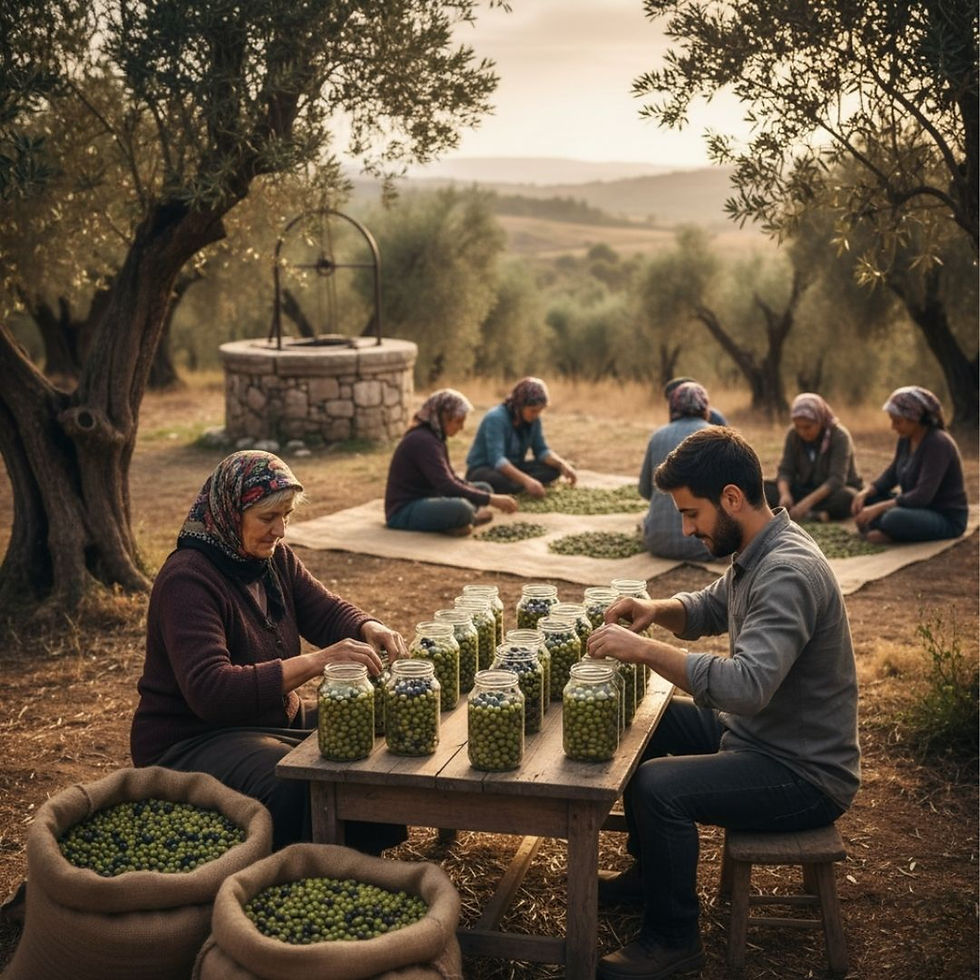
Curing your own olives at home is the best way to obtain olives that are pure and taste good.
Basic Principle: Coarse-grained rock salt must be used. Iodized table salt will cause the olives to melt.
Green Cracked/Scratched Olive Preparation: The olives are cracked or scratched. They are soaked in fresh water to remove their bitterness, changing the water regularly (10-20 days). After sweetening, they are placed in a brine prepared with rock salt and lemon salt.
Black Olive Storage (Basket Method): Ripe black olives are placed in a bin with layers of rock salt. The bin is shaken daily, and any accumulated bitter water is drained. The olives ripen in approximately 3-4 weeks. In the final stage, they are oiled and stored.
Chapter 6: How to Select and Store Quality Olives?
Selection Criteria: Olives should appear vibrant, bright, and firm. The flesh should be easily separated from the pit. They should have a pleasant olive scent, not excessively salty or sour. They should not have a chemical odor.
Naturalness: Choose olives produced using naturally fermented methods and free from additives.
Storage Conditions:
Pickled olives: They should be stored in their own brine, in an airtight container in the refrigerator or a cool, dark place. It's important that the water covers the olives.
Sele Olives: Store in airtight containers in a cool place. Adding a little olive oil prevents them from drying out and preserves their flavor.
Conclusion: Olives are a Valuable Heritage of Our Culture
Olives are one of the most precious treasures offered by the fertile lands of Anatolia. With their rich diversity, diverse processing methods, and unique flavor, they hold a special place on our tables. From the oily olives of Gemlik to the cracked olives of the Aegean, each variety holds its own unique story and labor. At Fethi Çelik, we are aware of this valuable heritage and aim to offer you the highest quality olives, processed using natural methods. Through conscious consumption, we can both contribute to our health and ensure the survival of this deep-rooted culture.


Comments