Clarity or Naturalness? The Debate on Filtered and Unfiltered Gemlik Olive Oil: Effects on Flavor, Quality, and Shelf Life

Appearance and Quality Perception of Olive Oil
One of the first things consumers notice when purchasing olive oil is its appearance. Some olive oils are crystal clear and shiny, while others are more cloudy, thicker, and even contain sediment at the bottom. This visual difference stems from one of the final, critical steps in the olive oil production process: filtration .
There are common misconceptions in the market, such as "unfiltered olive oil is more natural" or "filtered olive oil loses its nutritional value." So, what's the truth? How does filtration affect the quality of olive oil? Which one should you choose, especially for Gemlik olive oil, known for its balanced and elegant texture? We're scientifically examining the differences between filtered and unfiltered olive oils, detailing their impact on flavor, quality, and shelf life.
Chapter 1: Olive Oil Production Process and Filtration Stage
After the olives are pulped, they are squeezed (pressed or centrifuged).
First Oil (Crude Oil):
The oil produced after pressing is not pure. It contains microscopic particles of the olive fruit (pulp) and a small amount of vegetable juice (blackwater). In this state, the oil appears cloudy.
What is Filtration?
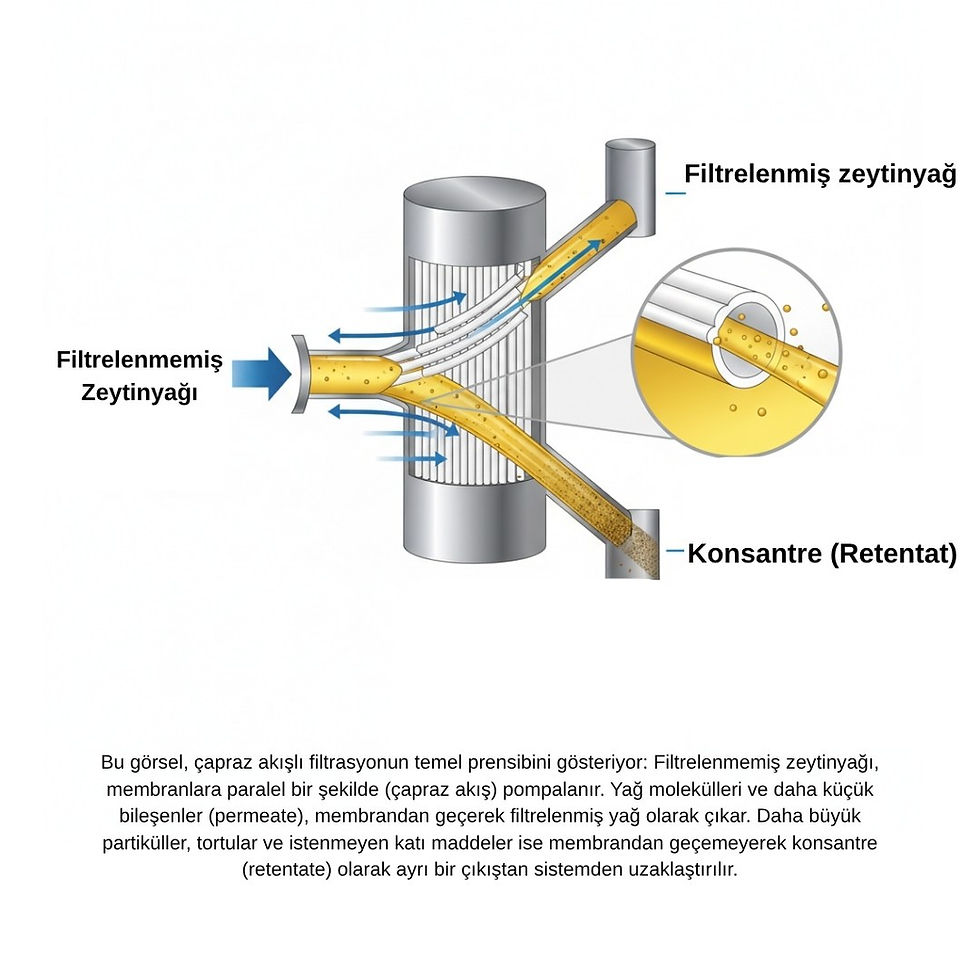
Filtration is the process of mechanically removing suspended solids and water from crude oil. This process is typically accomplished using materials such as natural cotton filters, cellulose sheets, or diatomaceous earth. Filtration is a physical purification process, not a chemical one.
Part 2: Unfiltered Olive Oil (Cloud Oil / Olio Nuovo)
Unfiltered olive oil is oil bottled immediately after production, without any filtering process. It is also called "Olio Nuovo" (New Oil) in Italian.
Features and Advantages (Short Term):
Appearance: Cloudy, opaque, and dense. Over time, particles settle to the bottom of the bottle, forming sediment.
Intense Aroma: When consumed immediately after production, it has a very intense and distinct fruitiness due to the fruit particles it contains. It resembles freshly squeezed fruit juice.
Perception of Naturalness: Consumers often perceive a blurred appearance as “more natural” or “less processed.”
Disadvantages and Risks (Medium and Long Term - Critical):
The appeal of unfiltered olive oil is short-lived and carries with it serious risks.
Very Short Shelf Life: This is its biggest drawback. Unfiltered oils spoil very quickly. Ideally, they should be consumed within 2-4 months of production.
Oxidation and Hydrolysis Risk: Water and pulp are olive oil's biggest enemies. Water causes the oil to hydrolyze, while pulp accelerates oxidation.
Development of Defects: The sediment that accumulates at the bottom of the bottle begins to ferment over time. This fermentation causes a very serious defect in olive oil called "muddy sediment." This defect gives the oil its off-flavors, sourness, mold, and rancid (stale) odors.
Increase in Acidity: With the deterioration process, free fatty acidity increases rapidly and the quality of the oil decreases.
Part 3: Filtered Olive Oil (Clear Oil)
Filtered olive oil is oil that has been purified and clarified after production.
Features and Advantages:
Clear Appearance: Bright, clean and transparent. Does not contain sediment.
Long Shelf Life and Stability: Filtration prevents oxidation by removing moisture and particles that cause oil to spoil. When stored properly, filtered olive oil can maintain its freshness for 18-24 months.
Clean Flavor Profile: The characteristic aromas of the olive variety (e.g., Gemlik) are clearly perceptible. The flavor profile remains consistent over time.
High Smoke Point: Particles in unfiltered oil burn quickly when heated. Filtered oils are more suitable for cooking because they have a higher smoke point.
Disadvantages:
Initial Aroma Loss (Minimal): The filtration process may reduce some of the oil's initial, intense fruitiness. However, this loss is negligible compared to the stability gained.
Chapter 4: Scientific Facts and Common Misconceptions
Misconception 1: Unfiltered Oil Is Healthier and Retains Its Nutritional Value.
Fact: There may be a very small difference in polyphenols initially. However, unfiltered oil loses much more polyphenols through oxidation over a short period of time. Studies have shown that after six months of storage, the polyphenol content of filtered olive oil is higher than that of unfiltered olive oil.
Misconception 2: Filtration Destroys Naturalness.
Fact: Filtration is a physical process, like passing freshly squeezed orange juice through a strainer. It doesn't involve any chemical intervention.
Misconception 3: Sediment is the Essence of the Olive.
Fact: Sediment is made up of olive pulp and water and is a waste that ferments over time and spoils the oil.
The International Olive Council (IOC) and olive oil experts strongly recommend the filtration process to preserve the quality and stability of olive oil.
Chapter 5: The Importance of Filtration for Gemlik Olive Oil
Gemlik olive oil is known for its elegant and balanced flavor profile. Stability is crucial to ensure these unique aromas don't deteriorate over time.
Preservation of Aromas: The delicate aromas of Gemlik oil can easily be masked by imperfections that can develop in unfiltered oil. Filtration allows Gemlik's notes, such as green almond, and apple, to be clearly perceived.
Consistency of Quality: Gemlik olives are known for their high quality. Filtration is essential to maintain this quality throughout the year.
Chapter 6: Advice for the Consumer: How to Make the Right Choice
Determine Your Consumption Rate: If you consume olive oil quickly (within a few months) and like the cloudy appearance, you can choose fresh, unfiltered oil from a reliable producer.
For Long-Term Use: If you are stocking olive oil to use throughout the year or do not want its quality to decrease over time, definitely choose filtered olive oil.
Market Shelf: Avoid olive oils that have been sitting on market shelves for months, appear cloudy, or have a thick layer of sediment at the bottom. These oils are likely spoiled and defective.
Conclusion: Clarity is Essential for Quality and Stability
While unfiltered olive oil may offer a brief, intense freshness and flavor experience, it presents a long-term disadvantage due to the risks involved. Filtration is a critical quality step that removes contaminants from olive oil, preserving its unique flavor, aroma, and health benefits.



Comments